Postpartum nutrition: warming foods that support recovery
Across Balinese, Ayurvedic and Chinese traditions the postpartum advice is remarkably consistent: warm, soft, cooked, and mineral-rich. Food is one of the simplest, most immediate levers available for postnatal recovery, and it does not need to be complicated to make a real difference.
This article is for informational purposes and does not replace medical advice from your midwife, OB-GYN, or pelvic floor physical therapist.
Why warmth
Birth is considered a depleting, cooling event in many traditional systems. Warm, easily digested food asks less of the digestive system and allows more energy to go toward tissue repair, milk production and simply staying warm through disrupted sleep.
Cold or raw foods, ice water, and large salads are typically avoided in these traditions for the first weeks, not because they are unhealthy in general, but because they ask more digestive effort at a time when the body has little to spare.
What to keep stocked
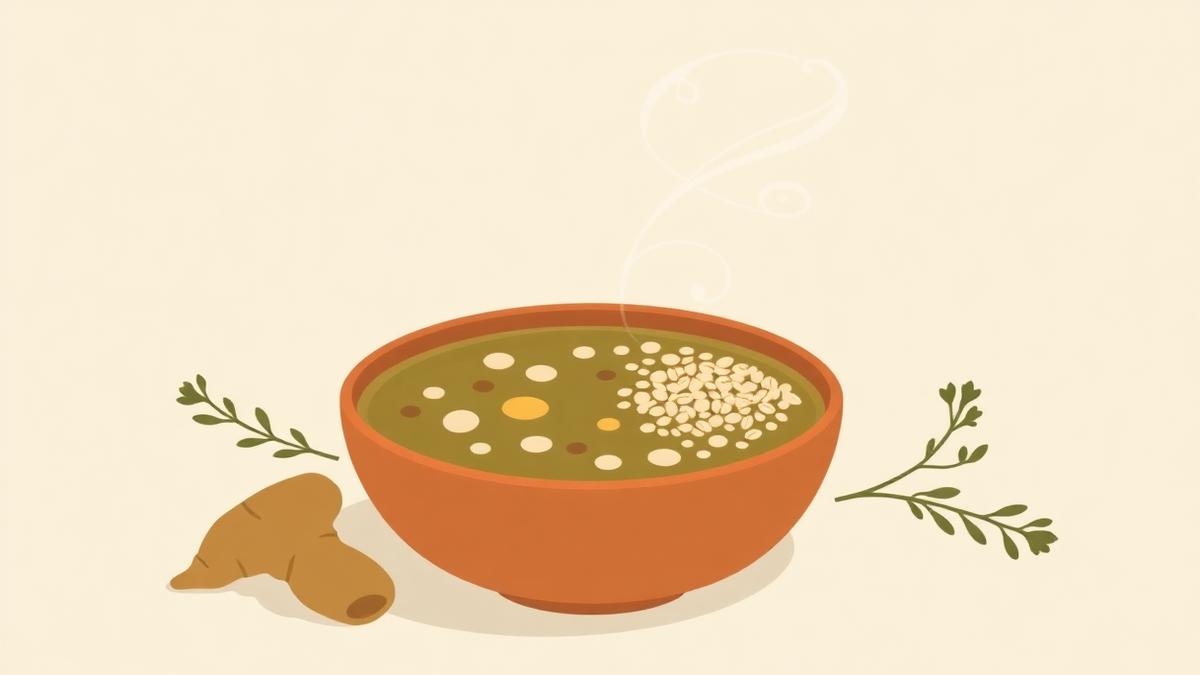
Slow-cooked oats with ghee and ginger, mineral bone broth, kitchari, coconut curries, and nettle or oatstraw infusions are traditional staples worth keeping on hand. Iron, omega-3 and protein at every meal support both mood and healing, since low iron in particular is closely linked to fatigue and low mood postpartum.
Simple additions like a spoon of ground sesame seeds, a handful of soaked nuts, or a daily piece of fruit with nut butter can quietly close nutritional gaps without adding complexity to your day.
Herbal teas such as fennel, fenugreek or nettle are traditionally used to support milk supply and gentle digestion, and a warm mug is also simply a moment to sit down.
One-handed and freezer-friendly
The best postpartum meal is the one you can eat with a baby in one arm. Batch-cook, freeze in single portions, and let people who offer help bring food rather than flowers or another outfit the baby will outgrow in weeks.
Soups, stews, dhals and grain bowls all freeze and reheat well, and preparing a batch before the birth, even a modest one, is one of the most practically useful things you can do in the final weeks of pregnancy.
A gentle note on eating for two feelings
Hunger and thirst are often much greater than expected, particularly while breastfeeding. Treat strong hunger as information, not something to manage or minimise, and keep easy snacks within arm's reach wherever you tend to feed the baby.
The 12-week postpartum program
Twelve weekly practices, wisdom talks, two yoga nidra sessions and week-by-week recovery guidance.
See the program