Posture for new moms: feeding, carrying and lifting with ease
Caring for a newborn means hours of holding, feeding, rocking and bending over a cot or changing table. It is no wonder that so many new mothers feel tight in the neck, shoulders and lower back. A few small changes in how you sit, stand and lift can make a real difference, and none of them take extra time.
This article is for informational purposes and does not replace medical advice from your midwife, OB-GYN, or pelvic floor physical therapist.
Bring the baby to you
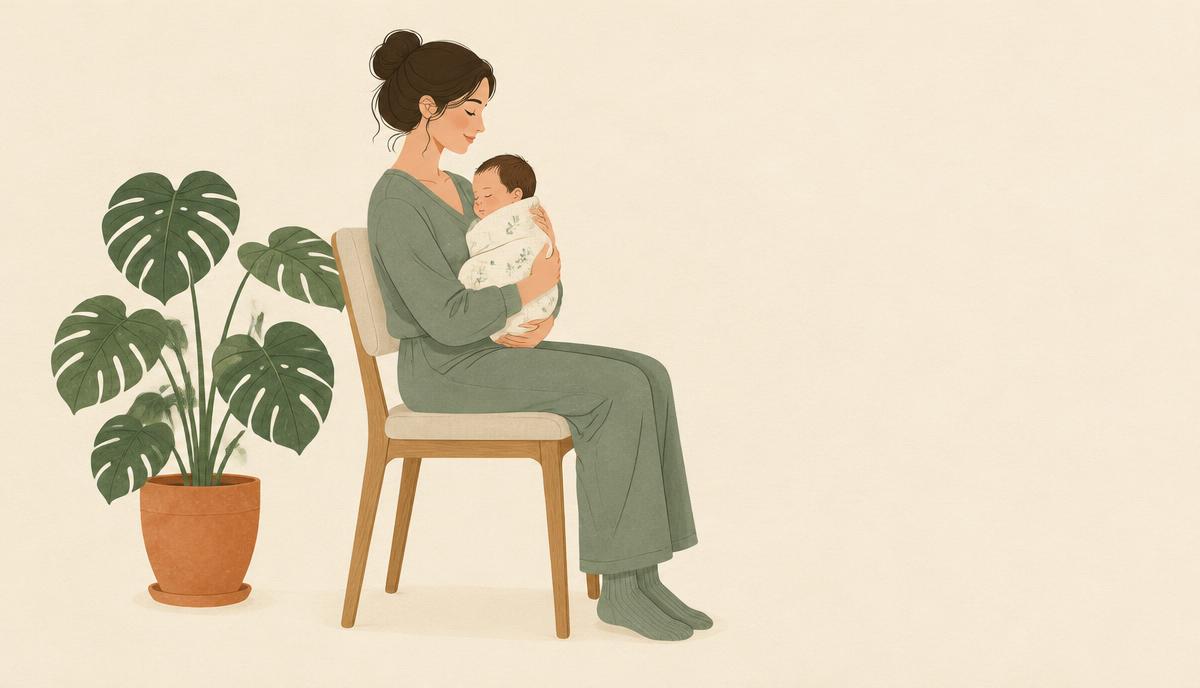
When feeding, it is natural to lean forward towards your baby. Try the opposite: sit back with your back supported and use cushions to raise your baby to the height of your breast or the bottle.
Rest your feet flat on the floor or on a small stool, and let your shoulders drop away from your ears. Every now and then, take one slow breath and soften your jaw.
Carrying without strain
Many of us carry a baby on one hip without thinking. Try to switch sides often so one side does not do all the work.
A well-fitted carrier spreads the weight across your back and hips. Your baby should sit high and close enough that you could kiss the top of their head.
Lifting from the floor or cot
Bend your knees instead of your back, bring your baby close to your body, and breathe out as you lift. That gentle exhale helps your deep core and pelvic floor support you.
The same idea works for car seats, prams and shopping bags. If you had a caesarean birth, follow your care provider's advice on what you can lift in the first weeks.
Three short stretches
Chest opener: sit tall, clasp your hands behind your back or hold a towel, and gently lift your chest for five slow breaths.
Neck release: tip your right ear towards your right shoulder and breathe for three breaths, then switch sides.
Seated cat-cow: with hands on your knees, round your back as you breathe out and gently arch as you breathe in. Repeat five times.
Sleep and rest positions
Posture matters at night too. Lying on your side with a pillow between your knees keeps your pelvis level and takes pressure off your lower back. If you had a caesarean birth, a small pillow against your belly can make turning over feel safer.
When you get out of bed, roll onto your side first, then push yourself up with your arms. This simple log roll protects your healing belly and pelvic floor, and many mothers keep the habit for months.
During the day, try to rest lying down for a few minutes rather than always slumping on the sofa. Even ten minutes on your back with your knees bent lets your spine and belly soften.
Kindness over perfection
There is no perfect posture. The best position is usually the next one, so keep moving and changing positions through the day. Notice, adjust gently, and let it go.
Frequently asked questions
How can I avoid back pain while breastfeeding?
Sit with your back supported, raise your baby with a pillow and bring them to your breast instead of hunching forward.
What is the best way to carry a newborn?
Hold your baby close to your chest, keep your shoulders soft and switch sides regularly. A well-fitted carrier spreads the weight.
How do I get out of bed after birth?
Roll onto your side first and push up with your arms. This log roll protects your belly and pelvic floor, especially after a c-section.
The 12-week postpartum program
Twelve weekly practices, wisdom talks, two yoga nidra sessions and week-by-week recovery guidance.
See the program