Postpartum yoga: when is it safe to start after birth?
The most common question new mothers ask about postpartum yoga is also the hardest to answer in one line: when can I move again? The honest answer is that you can begin breathing and reconnecting on day one, but strength work waits for your body's own green light. Yoga after childbirth is not a race back to your old shape, it is a slow, attentive rebuild, and the first 12 weeks postpartum are simply the beginning of that longer story.
This article is for informational purposes and does not replace medical advice from your midwife, OB-GYN, or pelvic floor physical therapist.
Week one: breath before movement
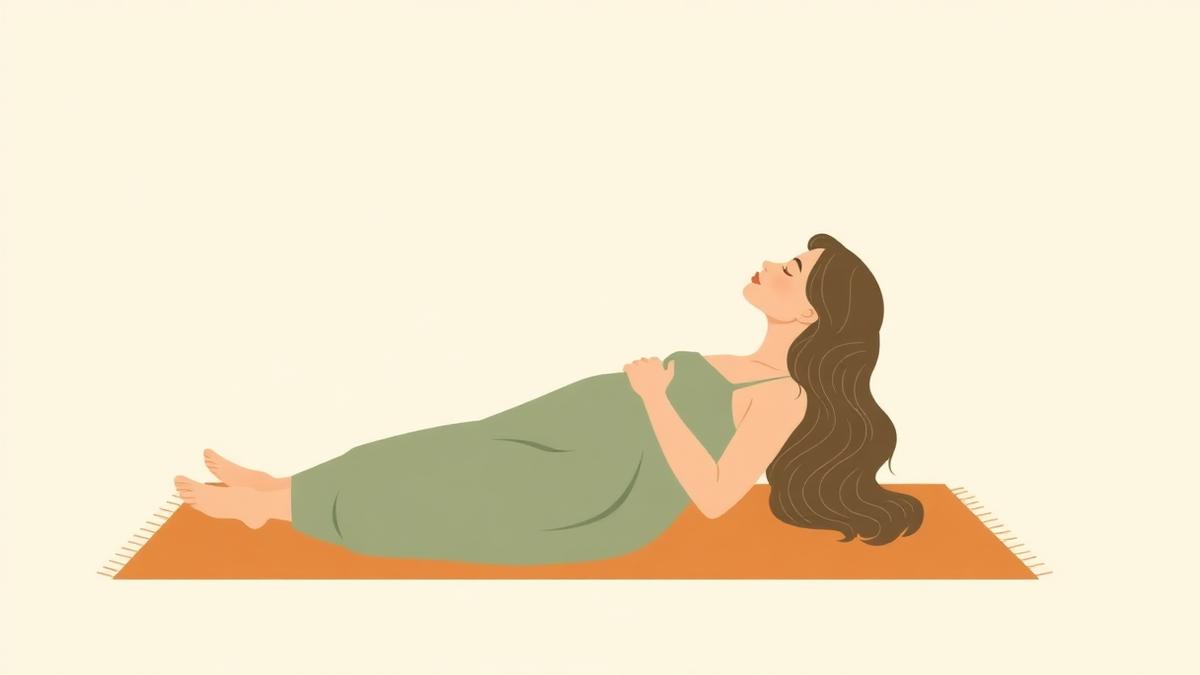
In the first days after birth your nervous system is still processing an enormous event, physically and emotionally. Rather than exercise, think reconnection: slow diaphragmatic breathing, gentle pelvic floor awareness, and lying down with one hand on your belly and one on your chest, feeling the two move in sequence rather than together.
Three to five minutes is enough. This is not a smaller version of your old practice, it is the foundation everything else is rebuilt on. If you feel steady, you can also try a few rounds of humming exhales while feeding, which calms both of you at once.
Do not judge this stage by how it looks. There is no pose here, no sequence to master. The work is entirely internal: noticing where you are holding tension, where you feel numb, and where sensation is starting to return.
Weeks two to six: soft mobility
Once bleeding is settling and you feel steady standing, add shoulder rolls, gentle spinal twists in a seated position, ankle and wrist circles, and supported cat-cow on hands and knees, moving slowly with the breath rather than for repetitions.
Feeding posture is already pulling your upper back forward, so open the chest daily. A simple seated stretch, arms reaching gently behind you with palms turned outward, can undo a surprising amount of that rounding in under a minute.
If anything increases bleeding, causes pain, or leaves a heavy dragging sensation in the pelvis, stop and rest. That sensation is information, not failure. It is your body asking for more time, and giving it that time now tends to shorten recovery overall.
This is also a good window to begin gentle pelvic floor exercises, slow and unrushed, paired with breath rather than done as a set of forceful squeezes.
After your 6 to 8 week check
Medical clearance is the point at which more challenging work becomes appropriate: sun salutations, standing sequences, balance poses and progressive core rebuilding, introduced gradually rather than all at once.
If you had a caesarean birth, wait until you can sit down without pain before starting these practices. That is your body's own signal that the scar tissue is ready for gentle movement. Scar massage usually begins around week six with your care provider's approval, and it can meaningfully improve mobility around the incision over time.
Even with clearance, build in stages. Add one new element a week rather than returning to a full pre-pregnancy practice overnight. Your joints, especially if you are breastfeeding, may still be more mobile than usual for months.
Give yourself permission to repeat
There is no prize for reaching week twelve on schedule. Repeating week one and week two until they feel easy is a legitimate and often wiser path, especially if birth was complicated or recovery has been slower than expected.
Gentle yoga for new mothers is meant to meet you where you are on any given day, not to hold you to a plan made before you knew what this season would actually feel like.
The 12-week postpartum program
Twelve weekly practices, wisdom talks, two yoga nidra sessions and week-by-week recovery guidance.
See the program